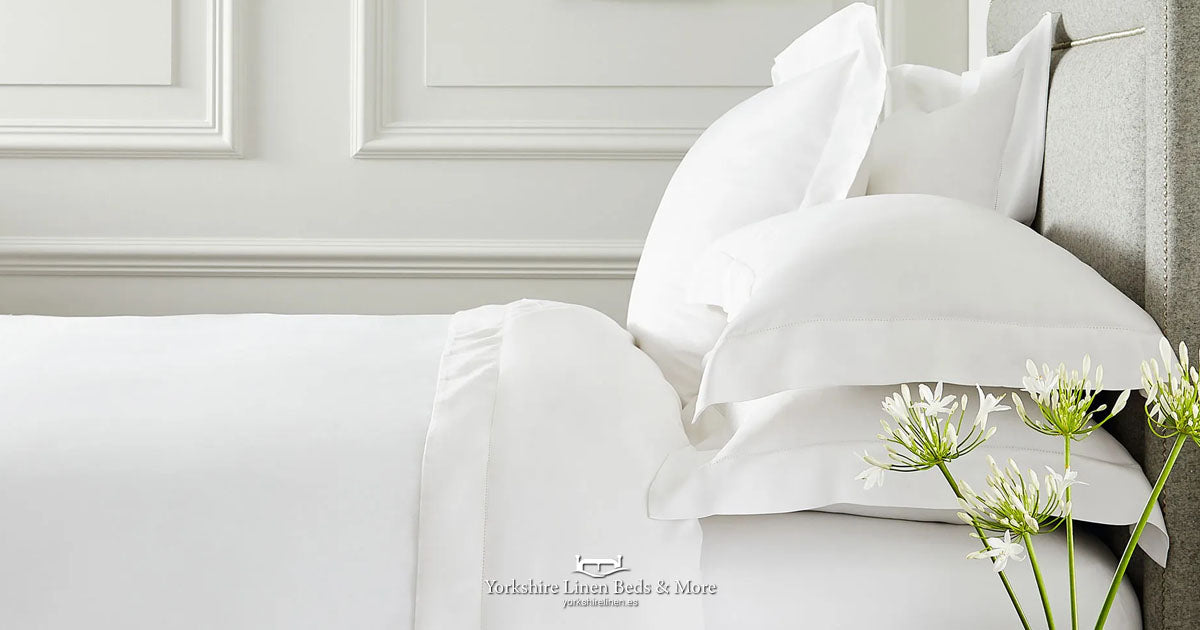
What is the difference between a duvet and a comforter?
Share
Duvet vs. Comforter: What’s the Real Difference (and Which is Best for You)?
If you’ve ever found yourself scrolling through bedding websites or wandering the aisles of a home store only to be met with a confusing array of "Duvets," "Comforters," "Quilts," and "Doonas," you are not alone. While they all serve the same fundamental purpose—keeping you warm and cozy at night—the differences between a duvet and a comforter are quite significant.
Choosing the wrong one can lead to more than just a decor mismatch; it can lead to overheating, difficult laundry days, and a bed that never quite looks like those "Pinterest-perfect" photos.
At The Linen Press, we believe that understanding your bedding is the first step to a better night’s sleep. Let’s break down the Great Bedding Debate: Duvet vs. Comforter.
1. The Duvet: The European Essential
The word "duvet" comes from the French word for "down." Traditionally, a duvet is a soft, flat bag filled with down, feathers, silk, wool, or synthetic alternatives.
The Defining Characteristic: A duvet is designed to be used with a Duvet Cover. Think of the duvet as the "pillow" and the cover as the "pillowcase."
Why Choose a Duvet?
- Easier Maintenance: Because the duvet itself is protected by a cover, you only need to wash the cover regularly. The duvet itself only needs a refresh once or twice a year.
- Style Versatility: Want to change your bedroom from a winter "Scandi-chic" look to a bright "Mediterranean Summer" vibe? You only need to swap the cover, not the entire bedspread.
- The "Cloud" Factor: Duvets are typically fluffier and offer more "loft" than comforters, giving your bed that inviting, cloud-like appearance.
2. The Comforter: The All-in-One Alternative
Popular primarily in the United States, a comforter is a thick, quilted, fluffy blanket that is designed to be used without a cover. The "cover" is already sewn onto the filling.
The Defining Characteristic: It is a single, finished piece of bedding. It is usually quilted to keep the filling evenly distributed.
Why Choose a Comforter?
- Simplicity: There is no wrestling with a duvet cover on laundry day. You just pull the comforter out of the dryer and put it on the bed.
- The "Layered" Look: Comforters are usually designed to be "short," meaning they don't hang over the edges of the bed as much as a duvet might. They are often sold as part of a "Bed-in-a-Bag" set with matching shams.
- Uniformity: Because the outer fabric is stitched through to the filling, you never get those annoying "cold spots" where the filling has migrated to one corner.
3. The Key Differences at a Glance
| Feature | Duvet | Comforter |
| Construction | Two separate pieces (Insert + Cover) | One single quilted piece |
| Laundry | Cover is washed weekly; Insert rarely | The whole unit must be washed |
| Style | Highly versatile (change covers) | Fixed style |
| Top Sheet? | Often used without a top sheet (European style) | Almost always used with a top sheet |
| Size | Often larger/oversized | Usually fits the bed dimensions exactly |
4. The Climate Factor: Living in Spain
When you live on the Costa del Sol, the "Duvet vs. Comforter" choice often comes down to temperature regulation.
The Duvet Advantage: In Spain, we have distinct seasons. With a duvet system, you can keep the same cover year-round but swap the internal "Insert" for different TOG ratings. You might use a heavy 13.5 TOG down duvet in the winter months and swap it for a lightweight 4.5 TOG or even a silk-fill insert during the spring.
The Comforter Downside: Because the comforter is one thick piece, it can be "too much" for a Mediterranean summer. You are often left with an "all or nothing" warmth level, which usually results in the comforter being kicked to the floor by 2:00 AM.
5. Laundering and Longevity
This is where the choice becomes practical. Washing a large, king-size comforter requires a high-capacity industrial washing machine. Doing this frequently can cause the filling to clump and the outer colors to fade.
With a duvet, you are washing a lightweight cotton cover. This saves water, saves energy, and ensures that your expensive duvet insert lasts for a decade or more because it isn't being subjected to the agitation of a washing machine every week.
6. How to Make Your Choice
- Choose a Duvet if: You like to change your decor often, you prefer a fluffy "hotel" look, or you want to adjust your warmth levels seasonally.
- Choose a Comforter if: You want a quick, easy way to make the bed and don't mind using a top sheet to keep the underside clean.
Conclusion
At The Linen Press, our hearts (and our beds) belong to the Duvet. The sheer flexibility, ease of cleaning, and the ability to customize your sleep experience for the Spanish climate make it the undisputed champion of the bedroom.
Whether you are looking for a high-TOG winter warmth or a featherlight summer cover, we have the perfect collection to help you build your dream bed.