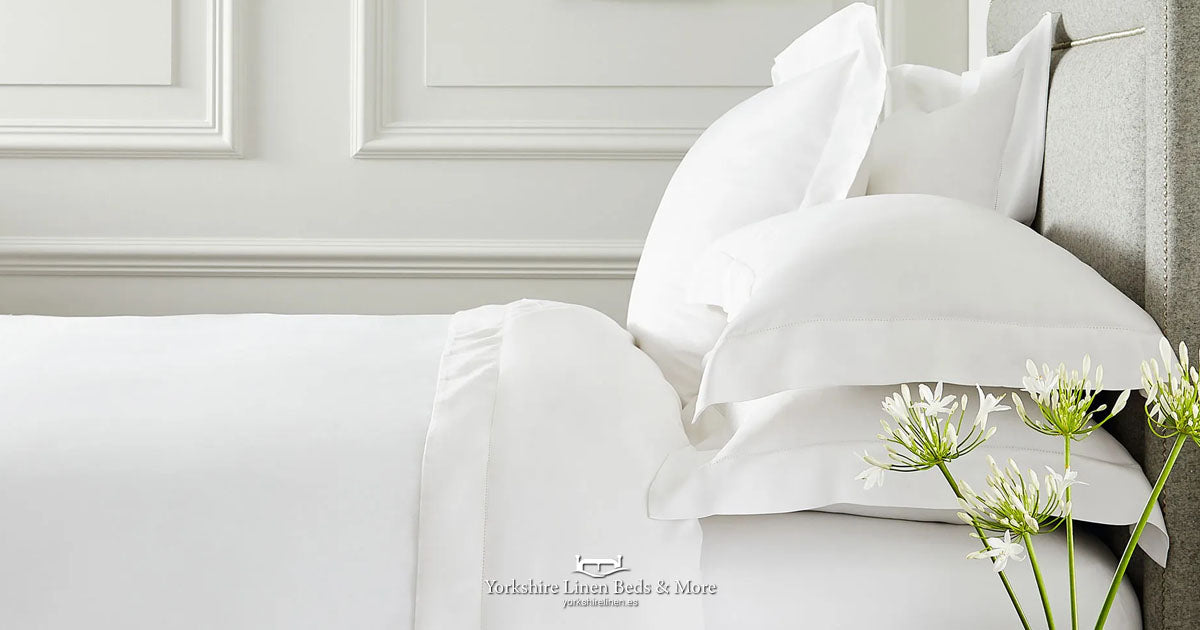
What is the difference between percale and sateen sheets?
Share
Percale vs. Sateen: The Ultimate Guide to Choosing Your Perfect Sheets
When you walk into our showrooms in Mijas or Marbella, or browse our collections online, you’ll see two words appearing more than any others: Percale and Sateen.
While many people believe these terms refer to the material of the sheets, they actually describe the weave. Both are typically made from 100% cotton—often the high-grade Egyptian or Turkish cotton we pride ourselves on at Yorkshire Linen—but the way those threads are interlaced creates two vastly different sleeping experiences.
If you’ve ever wondered why some sheets feel like a crisp, cool hotel bed while others feel like a buttery, soft embrace, the answer lies in the weave. In this guide, we’ll help you navigate the Percale vs. Sateen debate so you can dress your bed with confidence.
What is Percale? The "Crisp & Cool" Classic
The Weave: Percale (often called a "plain weave") follows a simple "one-over, one-under" pattern. This creates a balanced, tight structure that is incredibly durable.
The Feel: Think of a high-quality, freshly laundered white button-down shirt. Percale is matte, crisp, and smooth. It doesn’t have a shine, but it has a distinctive "snap" when you shake it out over the bed.
Why it’s perfect for Spain: Because the weave is breathable, it allows for significant airflow. This makes Percale the undisputed champion for hot sleepers and for those long, humid nights on the Costa del Sol. It feels cool to the touch and doesn't trap body heat, ensuring you wake up refreshed rather than clammy.
- Pros: Breathable, durable, gets softer with every wash.
- Cons: Prone to wrinkling (it loves a quick iron to get that "hotel" look).
What is Sateen? The "Silky & Smooth" Luxury
The Weave: Sateen uses a more complex "four-over, one-under" pattern. This means more thread surface is exposed on the face of the fabric.
The Feel: Sateen is often mistaken for silk or satin because of its lustrous sheen and "slippery" smoothness. It is heavier than Percale and drapes beautifully over the body, creating a "cocoon" effect.
The Luxury Factor: Sateen is the go-to for those who want their bedroom to look like an interior design magazine. It has a subtle glow under bedroom lighting and feels indulgent against the skin. Because the weave is denser, it is naturally more wrinkle-resistant than Percale, making it easier to maintain a "dressed" bed look.
- Pros: Silky feel, beautiful sheen, wrinkle-resistant, warmer for winter months.
- Cons: Can trap heat; more prone to pilling if not cared for correctly.
Percale vs. Sateen: The Comparison Table
| Feature | Percale | Sateen |
| Weave Pattern | 1-over, 1-under | 4-over, 1-under |
| Texture | Crisp, like a shirt | Silky, like butter |
| Finish | Matte | Luminous Sheen |
| Weight | Lightweight / Airy | Heavier / Draping |
| Breathability | High (Cooling) | Moderate (Warming) |
| Durability | Exceptional | High (but prone to snags) |
Which One is Right for You?
Choosing between these two isn't about which is "better"—it’s about how you sleep and how you want your room to look.
Choose Percale if...
- You are a "Hot Sleeper": If you find yourself kicking off the covers in the middle of the night, Percale’s airflow will be a lifesaver.
- You love the Hotel Look: Percale provides that "five-star hotel" crispness that feels clean and structured.
- You live in a high-humidity area: In coastal Spain, Percale stays "dryer" to the touch during the humid months.
Choose Sateen if...
- You have sensitive skin: The silky smoothness of Sateen is very gentle and creates less friction against the skin.
- You want year-round luxury: Sateen’s slightly heavier weight makes it incredibly cozy for the cooler Spanish winter nights.
- You hate ironing: Sateen comes out of the dryer much smoother than Percale, saving you time on laundry day.
Expert Care Tips from Yorkshire Linen
To ensure your investment lasts, regardless of the weave you choose, follow our "Golden Rules" for linen care:
- Cool Water is King: Wash your sheets at 30°C or 40°C. High heat can damage the fine fibers of a Sateen weave and cause Percale to become unnecessarily stiff.
- Avoid the "Chemical Trap": Don't overdo the fabric softener. It can coat the fibers and reduce the natural breathability of the cotton.
- Dry with Care: In Spain, we have the luxury of the sun! However, direct sunlight can bleach colors. Dry your whites in the sun to keep them bright, but keep your Sateen colors in the shade to prevent fading.
Conclusion
At Yorkshire Linen Beds & More, we believe that a good night's sleep is the foundation of a happy life. Whether you prefer the breezy, crisp nature of Percale or the indulgent, silky drape of Sateen, we have a range of thread counts and designs to suit your style.
Visit us in-store to feel the difference for yourself, or explore our Full Bedding Collection today.