What is the difference between Egyptian cotton and percale for hot climates?
If you've been researching quality bedding for a home in Spain, you've almost certainly encountered both terms - Egyptian cotton and percale - often used separately, sometimes together, and occasionally in ways that suggest they are alternatives to each other. They are not. Understanding the relationship between them, and what each actually means for how your bedding feels on a warm Mediterranean night, will help you make a considerably better purchasing decision. Here's the clear explanation.

Egyptian Cotton and Percale Are Not the Same Kind of Thing
This is the most important point to establish first, because the confusion between these two terms is extremely common and leads to genuinely poor purchasing decisions.
Egyptian cotton is a fibre - it describes where the cotton comes from and what variety of cotton plant produced it. Specifically, it refers to extra-long staple cotton grown in Egypt's Nile Delta from the Gossypium barbadense plant, whose fibres are significantly longer (34–45mm) than those of standard upland cotton (25–28mm).
See All Our Egyptian Cotton & Bamboo Bed Linen
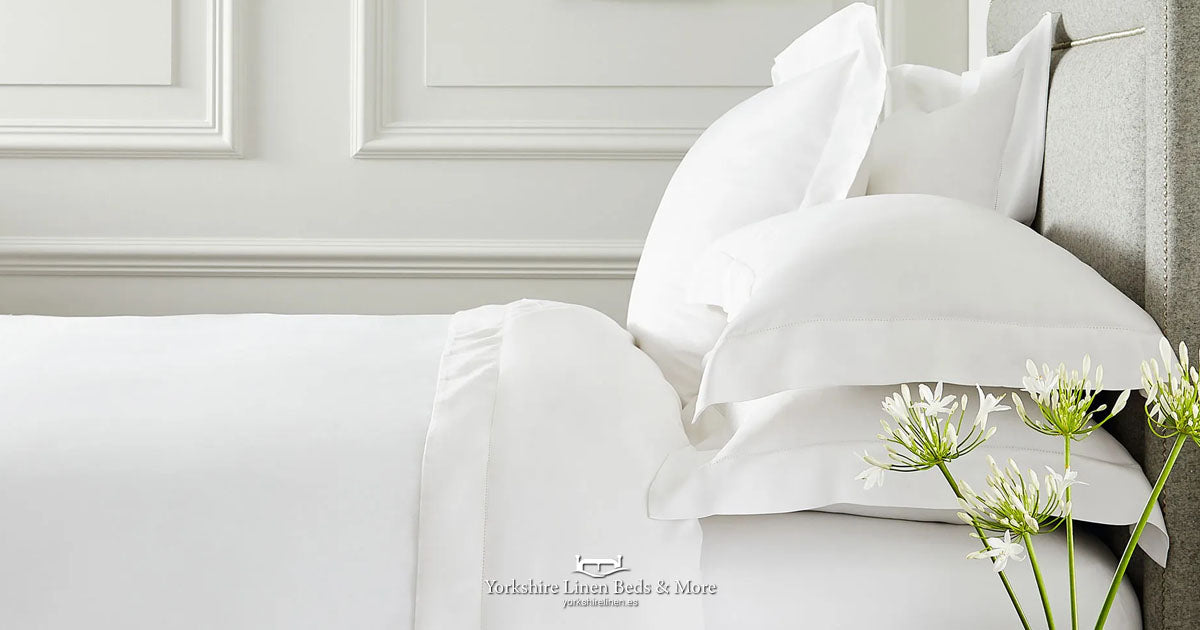
"Discover the ultimate in sleeping comfort with our certified 100% Egyptian Cotton collection. Woven from extra-long staple fibers, our luxury bed linens deliver a silky-smooth sateen finish, exceptional durability, and natural temperature regulation. Whether you are looking for crisp flat sheets, deep-fit fitted sheets, tailored pillowcases, or opulent duvet covers, explore our complete white bedding range available in 200, 400, and 600 thread count options."
Percale is a weave structure - it describes how the threads are interlocked to create the fabric. Specifically, it refers to a one-over-one alternating weave (each thread passes over one thread and under the next) that produces a crisp, matte, breathable fabric with a tight, even structure.
You can have Egyptian cotton in a percale weave. You can have Egyptian cotton in a sateen weave. You can have regular cotton in a percale weave. You can have regular cotton in a sateen weave. The fibre and the weave are independent variables, and both matter enormously for the finished result - particularly in a hot climate.
What Percale Actually Feels Like
Percale has a characteristic feel that is immediately recognisable once you know what you're looking for: crisp, cool, smooth, and matte. It has none of the sheen or silkiness of sateen - instead, it has a clean, fresh quality that many people associate with hotel linen at the more relaxed, Mediterranean end of the market, rather than the opulent five-star variety.
The one-over-one weave creates a fabric with a relatively open structure - more air gaps per square inch than a sateen weave at the same thread count. This is the key property for hot climate performance. Air circulates more freely through percale fabric, heat dissipates more readily, and the fabric is less likely to feel clammy or close against the skin on a warm night.
Percale also has a slight natural stiffness - not an unpleasant stiffness, but a crispness that some sleepers find deeply satisfying, particularly those who grew up with traditionally laundered and lightly starched cotton sheets. It softens with washing but never loses its fundamental character.
For hot climates - and particularly for the Costa del Sol, where summer nights rarely cool below the mid-twenties and the bedroom temperature can remain uncomfortably warm through August - percale's combination of crispness, breathability, and cool-to-the-touch feel makes it an extremely strong choice.
What Sateen Actually Feels Like
Sateen - the other primary weave used for quality cotton bedding - uses a four-over-one structure, where each thread passes over four threads before passing under one. This creates a longer surface float, maximising the smooth, reflective surface of the thread and producing the characteristic silkiness and subtle sheen associated with luxury hotel bedding.
The feel of sateen Egyptian cotton is fundamentally different from percale: softer, warmer, more enveloping. It drapes more fluidly, catches the light more noticeably, and feels closer to silk against the skin than percale does. Many people's instinctive preference, when they first feel the two side by side, is for sateen - it has an immediate, sensory appeal that percale's quieter crispness doesn't always match on first contact.
However - and this is critical for hot climate buyers - sateen is inherently less breathable than percale at the same thread count. The longer surface float creates a denser surface layer that traps heat and moisture more readily than percale's more open structure. In cold or temperate climates, this is an advantage: sateen bedding feels warmer and more luxurious in ways that are genuinely appreciated. In Spain's summer, that same property becomes a disadvantage.
This doesn't make sateen a poor choice for Spain - the 540TC and 600TC Egyptian cotton sateen ranges at Yorkshire Linen are excellent bedding at any time of year. But for the height of summer, or for those who naturally sleep warm regardless of season, percale has a functional advantage that sateen cannot match.
Egyptian Cotton in Each Weave - How the Fibre Makes the Difference
Understanding where Egyptian cotton fits into this comparison requires holding both variables in mind simultaneously.
Egyptian cotton percale is the most breathable, most cooling option available in genuine quality bedding. The long fibres of Egyptian cotton produce a finer, smoother percale yarn than standard cotton can achieve - which means the fabric is crisper and more refined, with less surface roughness and a more even, consistent feel. It washes exceptionally well, becoming progressively crisper and more comfortable over time rather than roughening and pilling as standard cotton percale does. For sleepers in hot climates who want the absolute best in cool, breathable bedding, Egyptian cotton percale is the answer.
Regular cotton percale - the more commonly available and more affordable option - is a genuinely good choice for everyday use and shares the fundamental breathability advantage of the percale weave. The difference from Egyptian cotton percale is felt in the surface texture (slightly less smooth, slightly more matte), the durability (shorter fibres pill more readily), and the long-term performance (it degrades rather than improving with washing). For rental properties and high-turnover applications, a good quality regular cotton percale at 200–300TC represents excellent value.
Egyptian cotton sateen - the weave used in both the Hotel Stripe 540TC and the 600TC range at Yorkshire Linen - offers the most luxurious feel and the most refined appearance, with the breathability advantage of the Egyptian cotton fibre partially offsetting the reduced airflow of the sateen weave. For year-round use in Spain, it is an excellent choice; for the peak of summer, those who sleep warm may find percale more comfortable.
Regular cotton sateen - less common at quality thread counts - combines the reduced breathability of sateen with the shorter-fibre characteristics of standard cotton. At lower thread counts and price points, it is a perfectly acceptable everyday choice; it does not approach the quality of Egyptian cotton in either weave.
Making the Right Choice for Your Climate and Sleep Style
For hot climates, the decision comes down to a simple framework:
If you sleep cool naturally and the primary consideration is the feel and appearance of the bedding rather than temperature regulation, Egyptian cotton sateen at 540TC or 600TC is a superb choice for year-round use. The breathability of the Egyptian cotton fibre is sufficient for most sleepers even through Spanish summers.
If you sleep warm - if you regularly find yourself throwing off covers, waking hot, or choosing the coolest room in the house - Egyptian cotton percale is the more technically appropriate choice. Its combination of long-fibre quality and open weave structure maximises coolness and breathability in a way that no sateen product can fully replicate.
For rental properties, the practical considerations often dominate. A good quality cotton percale - Egyptian or otherwise - at 200–300TC offers the best balance of breathability, launderability, and cost for high-turnover rental use. Save the Egyptian cotton sateen for the master bedroom where the premium finish and appearance most justify the price.
For children's bedrooms and nurseries in Spain, percale cotton - breathable, cool, easy to wash at high temperatures - is almost always the right choice, regardless of thread count or fibre origin.
| Egyptian Cotton Percale | Egyptian Cotton Sateen | Regular Cotton Percale | |
| Breathability | Excellent | Good | Good |
| Feel | Crisp, cool, smooth | Silky, warm, lustrous | Crisp, slightly rougher |
| Hot climate suitability | Excellent | Good | Good |
| Durability | Excellent | Excellent | Moderate |
| Improves with washing | Yes | Yes | No |
| Best for | Hot sleepers, summer | Year-round luxury | Rental, everyday use |
Yorkshire Linen stocks Egyptian cotton bedding in sateen weave across two premium ranges - the Hotel Stripe 540TC by Belledorm and the 600TC certified Egyptian cotton collection - both available online and in our Mijas showroom.
👉 Shop Sheets & Pillowcases
Ctra. de Mijas, Km 3.5, Mijas - Monday to Friday 10am–6pm, Saturday 10am–5pm. Phone: +34 952 197 577. WhatsApp: +34 626 147 703.
Yorkshire Linen Beds & More - Quality Home Textiles on the Costa del Sol since 2005.